Tuesday, April 20, 2010

Thoughts and impressions after returning home from Hospital Medicine 2010

HM 2010 was a wonderful experience. I'll be spending the next few weeks reviewing course materials, thinking about how to incorporate changes into my practice, and reflecting on what the experience meant to me. I've done this throughout my career. In recent years blogging about meetings has added a new dimension. I tried to blog HM 2010 in real time. That lasted one day. The delivery of content was too fast for me to do it justice. Ideas and research findings in medicine are seldom “breaking news” and I prefer to offer discussion and links to background sources rather than a series of sound bites. I'll be doing that (if no one else is interested, just for my own reference) with some of the remaining course content in the near future.


On the final day of sessions we were treated to a talk by Bob Wachter. Though he and I are polar opposites on the political spectrum I find his talks insightful and entertaining. He discussed how health care reform---both the law itself and the conversation surrounding it---might affect hospitalists. If you're a follower of his blog you can imagine some of the things he had to say. As he has said there, there will be a major new emphasis on shared accountability and integration---attributes that separate the Mayos from the McAllens of the world. (Look for ACO to be the new HMO). He suggested, as he has said before in his blog, that hospitalist groups might have a role in promoting such integration in their local communities. Up to now, unfortunately, the growth of hospital medicine seems to have had the opposite effect. Will that change under new incentives? It's anybody's guess.


An important piece of integration lies in improving transitions between hospital and clinic. The transitions problem is exacerbated by the shortage of primary care physicians. One idea that's gaining traction was mentioned several times at HM 2010: hospitalists running post-discharge clinics. I have commented before that I oppose that idea. Follow up care of high acuity post-discharge patients is important but it is the role of the primary care physician. Hospitalists who staff such clinics are reverting to the role of the traditional internist. They are no longer hospitalists. The hospitalist model of care built a disconnect between hospital medicine and clinic medicine, and that disconnect is a quality and safety problem. The logical extension of the post-discharge clinic would be to address that safety problem by dismantling the hospitalist movement altogether.


I came away from HM 2010 a little less cynical about the Society of Hospital Medicine. I truly believe they approach quality and safety for hospitalized patients with a level of sincerity and vigor unmatched by any other professional organization. That said, I'm still troubled by their uncritical acceptance of faulty ideas about such things as performance measures, never events and hospitalists as utility players.
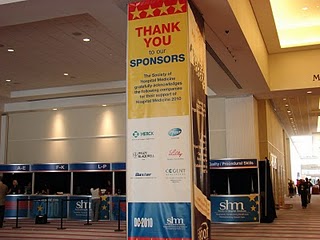

Finally, a few words about the exhibit hall. The high level of industry support was readily apparent. The SHM annual meeting would not be of the quality it is without such support. I am more convinced than ever that the “firewalls” were adequate to address any conflicts of interest. Public access to the digital archives of the meeting presentations will be available in about a month. I challenge anyone to cite bias or other degradation of content related to industry support. But what was most impressive about the exhibit hall was the number of recruiting displays by health care systems and staffing companies. There are still plenty of hospitalist jobs out there!


Acute and chronic sleep deprivation

The older I get the more I appreciate the benefits of sleep. So I found this study interesting.

Sleep loss leads to profound performance decrements. Yet many individuals believe they adapt to chronic sleep loss or that recovery requires only a single extended sleep episode...

Despite recurrent acute and substantial chronic sleep loss, 10-hour sleep opportunities consistently restored vigilance task performance during the first several hours of wakefulness. However, chronic sleep loss markedly increased the rate of deterioration in performance across wakefulness, particularly during the circadian “night.” Thus, extended wake during the circadian night reveals the cumulative detrimental effects of chronic sleep loss on performance, with potential adverse health and safety consequences.


In other words a 10 hour session of “make up” sleep is not restorative if sleep deprivation is chronic, defined as getting 7 or fewer hours sleep per night over time. Researchers don't know how long it takes to recover from chronic sleep deprivation other than to say that 3 days doesn't seem to be enough.

I work a 7 day on 7 day off schedule and this rings true to me. I progressively accumulate sleep debt during the on week. It seems to take most of the off week to recover. But it was even worse back in the days of working every week with rotating night call---like having jet lag once a week.

H/T to Clinical Cases and Images.

Monday, April 19, 2010

Pro-BNP levels in the evaluation of patients presenting with chest pain

Patients with chest pain who “rule out” with negative ECGs and troponin levels present a difficult problem because although they lack objective signs of ischemia their symptoms may still have represented cardiac pain, placing them at risk for future events. Pro-BNP was shown to provide incremental prognostic information in such patients in a previous study.

A new study by the same authors compared the conventional strategy of stress testing such patients against a new strategy of combining a clinical risk score with Pro-BNP testing and found equivalent outcomes:

Results
A total of 110 patients (69%) were hospitalized using usual management in comparison with 90 (56%) in the new strategy (P = .03). There were no differences in death or myocardial infarction (n = 11, 6.9% vs n = 6, 3.8%, P = .3) or cardiac events (n = 38, 24% vs n = 28, 18%, P = .2). Revascularizations at the index episode were more frequent under usual management (18% vs 8%,P = .01), although the new strategy was associated with higher rate of planned postdischarge revascularizations (0.6% vs 5%, P = .04).

Conclusions
A strategy combining clinical history and NT-proBNP is simpler and reduced initial emergency hospitalizations in patients with chest pain, in comparison with the usual strategy involving exercise testing. Larger studies to assess its impact on long-term hard end points are needed.
A caveat not mentioned by the authors is that Pro-BNP levels may be falsely low in patients with obesity. A Pro-BNP cut off of 110 was used.


Free full text via Medscape here.

Occupational lung disease slide show

Lots of xrays and histopathology. Via Medscape.

Sunday, April 18, 2010

Concerning the lack of posts

I returned last week travel-weary from SHM 2010 and jumped right into a very hectic week of work shifts. I found out that it's true what they say: when you deviate from your usual frequency of posting it really wreaks havoc on your blog stats.


I hope to resume blogging apace over the next few days. I'll have some catching up to do in commenting on other bloggers' posts and new journal articles. Also, I'm still pumped and charged about my experience at SHM 2010 and plan to write some additional posts about the meeting content.

Saturday, April 10, 2010

Hospital Medicine 2010 panel on health care reform


Yesterday morning’s plenary sessions included a panel discussion on health care reform featuring Eric Siegal, MD, FHM, Patrick Conway, MD, MSC, Leslie Norwalk and Ronald Greeno, MD, FHM. The tone, though not overtly partisan, was generally favorable to the recently passed bill.

What did I learn? Mainly some specifics in this bill that confirmed many of my fears about unintended consequences. The administrative arms of the new health system will have discretionary power to make all sorts of new changes without legislative approval. Just one example is the new subsidiary of CMS, the Center for Medicare and Medicaid Innovation. The perverse incentives and potential new crimes created by this package are staggering. With the prospect of increased bundling of all sorts of services the new catch phrase is “aligned incentives”, really a euphemism for collusion among providers to limit care.

Address by Paul Levy, Hospital Medicine 2010

Paul Levy, President and CEO of Beth Israel Deaconess Medical Center in Boston, spoke yesterday on patient safety. He writes a lot about safety and transparency at BIDMC on his blog Running a Hospital. His approach, though widely applauded, is difficult of me to accept uncritically. A highly celebrated example of transparency at BIDMC a couple of years ago, for example, concerning a case of wrong side surgery, seemed oddly selective to me:

What surgical procedure was actually done? We aren’t told, but given that it was characterized as wrong side we know it involved a structure of bilateral symmetry. And, from White Coat Notes (linked from Levy’s post) we learn that it was not an organ removal and did not result in permanent harm. Was it a biopsy, an arthroscopic procedure or carpal tunnel release?

Whatever it was the hospital is apparently not threatened with huge financial loss. Levy’s candor, laudable as it is, must be viewed in that context. After the OR staff disclosed the error to the patient Levy emailed the entire hospital staff, the Boston Globe and other media about the incident! But what if the patient had renal cell carcinoma and had the wrong kidney removed, sentencing him/her to long term hemodialysis? Would Levy have responded in the same way? I doubt it. If he shared such an incident with the media Beth Israel’s attorneys would have concerns and the malpractice carrier would arguably be within its rights to refuse coverage.


What’s equally disappointing is that Levy seems to buy into the popular but implausible notion of never events. In his talk he acknowledged that the idea isn’t scientific and that motivational thinking, the real mark of a leader, may have to trump scientific objectivity. To me, as regular readers know, it’s a goofy idea and one that has consequences.

So how is Beth Israel doing? Despite rigorous adherence to multiple evidence based measures (their hand hygiene rates are second to none) their central line infection rates, though low, are not trending toward zero. In fact they’ve hardly budged in almost two years.

That criticism aside their safety processes are praiseworthy. They do a root cause analysis on every event in designated categories and are relentless in their efforts to reduce harm. Levy wrote about his visit to Hospital Medicine 2010 here.

Friday, April 09, 2010

Hospital Medicine 2010 April 9 sessions---rheumatology pearls


Brian Mandell, MD, from Cleveland Clinic gave the talk.

When to suspect vasculitis? Know the red flags: mononeuritis multiplex; ischemic disease if unusual distribution or demographic (eg Takayasu’s); others.

A positive ANCA is meaningless if the patient’s illness doesn’t resemble Wegener’s, MPA or RPGN.

If vasculitis appears to relapse before tapering of immunosuppressive therapy take infection for granted. If apparent flare during taper, be wary of infection but it could be recurrent disease.

Septic arthritis---11% mortality.


Underappreciated complications of immunosuppressive therapy:

Corticosteroids associated with the widest variety of infectious complications, as they affect all arms of the immune system.

Anti-TNFs and Rituximab---Heb B flare, acute liver failure.

Azathiaprine---hypersensitivity syndrome.


Weakness and elevated CK---differentiate between true myositis and non-inflammatory myopathy. EMG may help.

Aldolase not specific for muscle. Acts more like LDH.

Hospital Medicine 2010 April 9 sessions---selected nephrology pearls


Derek Fine, MD gave a talk on renal problems in hospitalized patients and noted---

It’s the CYP 34A interactions that often get us into trouble with statin myopathy leading to renal failure. Simvastatin has the worst reputation for this but lovastatin does it too and, to a lesser extent, atorvastatin. Read the labeling!

Don’t forget acute interstitial nephritis. Non-classic presentations are increasingly recognized. (Although not on the list of usual suspects a quick PubMed search revealed PPIs, vancomycin and Cox 2’s as recently recognized causes [1] [2] [3] [4] [5] [6]). Rx: stop the drug, and sometimes steroids.

Renal failure after cardiac cath? Consider atheroembolic etiology rather than contrast induced if onset over 48hrs post or no evidence of recovery in 5 days, particularly if systemic signs/sx.

Iodinated contrast nephropathy? Nothing new there, really, but here’s a Dr. RW bias: If you need to rule out PE why not V/Q instead of CT? It’s just as good in many cases.

Don’t forget phosphate nephropathy (can cause AKI sometimes followed by CKD).

Normal saline as a cause of resistant HT in hospitalized patients? We’re not used to thinking that way. It takes a boat load of saline to resuscitate. Traditionally we have under-resuscitated patients. Why be concerned about hypertension? Because some hypertensive patients are salt sensitive. Even “keep open” normal saline provides a significant sodium load. Look at the periodic table and do the math: 23mg/meq. This is not to advocate for hypotonic fluids in hospitalized patients, because such fluids fairly predictably lead to hyponatremia. The point is to keep in mind that in salt sensitive patients what may seem to be nominal amounts of saline may contribute to resistant hypertension.

Nephrogenic systemic fibrosis, the latest scleroderma mimic, is on the radar screen. I mentioned contraindications to contrast MRI and the relative safety of Gadolinium preparations the other day. In exceptional cases a patient with contraindications absolutely, positively has to have a contrast MRI. Then what? Use the lowest risk agent at the lowest dose possible followed by intensive hemodialysis using special methods.

Poster presentations at Hospital Medicine 2010

Here are a few I found interesting:

Profiling hospitalists for utilization and outcome metrics
If you group has significant hand offs, such as shift work or several-days-on-several-days-off schedules, you can’t accurately profile individual hospitalists. It doesn’t work because patient care is spread out among multiple providers.

Poster 12 by Ansari, et. al., Loyola.


Another study showing no impact of RRTs
---even when the team rounded proactively on all patients transferred out of the ICU.

Poster 28, Butcher, et al, UCSF.


Press-Ganey surveys meaningless
P-G patient satisfaction surveys are attributed to the discharging physician (regardless of who really took care of the patient) and are mailed to the patient for completion days or weeks after discharge. Forth, et al, at Northwestern University, (poster 54) attempted to validate P-G surveys with an instrument used in real time during hospitalization, confirming that the patient knew the identity of the treating doctor. The result? Not validated. No correlation. R values ~ 0.2.


Patients who leave AMA are at higher risk
---for mortality and just about everything else. This was a huge database and apparently the first study of its kind. Should we target the AMA patients for special post discharge intervention as the authors suggest?

Poster 57, Glasgow, et al, Iowa City.


Poor survey perceptions among hospital workers about the patient safety culture
---were strongly associated with higher readmission rates for CHF and AMI in a survey reported by Hansen, et al, Northwestern University and Harvard School of Public Health. Poster 60.


Non-evidence based use of PPIs
---was rampant in a chart review by Rizvi, et al, UTHSCSA (poster 125). Most were started in the hospital for bundle compliance and for a variety or weak and sloppy indications. Many of the PPI prescriptions were continued following discharge with no reason documented. This is in part an adverse consequence of a performance measure.


Patient falls a never event---NOT
Despite a vigorous initiative using a multidisciplinary team, only a dent was made in the rate of patient falls, from 3.07 to 2.42 falls per 1000 patient-days in a study from Northwestern University by Shah et al (poster 192).

Statins in patients with NASH?

From the Medscape Ask the Experts series:

There are 2 considerations for the use of statins in patients with nonalcoholic steatohepatitis: to control the hyperlipidemia that is frequently associated with NASH, and to use them as therapy for NASH itself. Statins can be used to treat hyperlipidemia in patients with chronic liver disease.[1-3] The risk for statin-induced hepatotoxicity is minimal in patients with chronic liver disease, and serum aminotransferase levels can be monitored. Any statin can be used; both pravastatin and atorvastatin are acceptable for such patients.[4-6]

Thursday, April 08, 2010

If you’re attending SHM 2010

---stop and say thanks to a drug rep. Really.


Without their support a meeting of this caliber would not be possible.

I’m a walking advertisement for Big Pharma at SHM 2010


I have no choice. I can’t access the sessions otherwise. But I don’t mind.

Arrived in Washington, DC

---late last night to attend Hospital Medicine 2010, our national meeting. Travel was difficult yesterday thanks to fouled up flight plans. I’m very tired this morning but pumped up about the meeting with its incredible networking opportunities (hope to see some of you here!) and wonderful course content.

You can follow meeting highlights at the official HM 2010 blog. If you want the politically incorrect version just stop by here over the next few days, where I will be posting updates as time and energy permit.

Hospitalized patients often not in the loop about their care

From Mayo Clinic Procedings:

RESULTS: Of 250 eligible patients, 241 (96%) agreed to be interviewed. A total of 233 (97%) of 241 physicians completed the interview, although sample sizes vary because of missing data elements. Of 239 patients, 77 (32%) correctly named at least 1 of their hospital physicians, and 143 patients (60%) correctly named their nurses. For each aspect of care, patients and physicians lacked agreement on the plan of care in a large number of instances. Specifically, there was no agreement between patients and physicians on planned tests or procedures for the day in 87 (38%) of 229 instances and in 22 (10%) of 220 instances. Complete agreement on the anticipated length of stay occurred in only 85 (39%) of 218 instances.

Nursing staffing and mortality after hip fracture hospitalization

Presented at the American Association of Orthopaedic Surgeons 2010 Annual Meeting and reported in Medscape:

In a retrospective cohort study presented here at the American Association of Orthopaedic Surgeons 2010 Annual Meeting, the risk for death among elderly patients in the hospital with hip fractures increased 22% when the nursing staff was reduced by 1 full-time nurse each day, Peter Schilling, MD, from the University of Michigan Medical Center in Ann Arbor, told meeting delegates.


This is not terribly surprising to me. These frail patients are labor intensive and require close monitoring.

Wednesday, April 07, 2010

Nephrogenic systemic fibrosis

---is the latest scleroderma mimic. It can cause disabling skin contractures, internal organ involvement and sometimes be fatal. A recent review in Journal of Hospital Medicine offers helpful advice.

Here's the skinny:

The risk of NSF varies with the brand of gadolinium based contrast used. Gadoteridol (Prohance) carries the lowest risk. Gadodiamide (Omniscan) is a high risk product. The others are intermediate in risk.

Avoid contrast in patients with GFR below 30 (be careful how you estimate GFR!), those with ESRD and those with AKI.

Mechanical ventilation 101

A review published in SMJ, reproduced as free full text via Medscape.

Concise and practical.

Tuesday, April 06, 2010

The hospitalist model and the fragmentation of health care

Over at Med Rants DB cited an article in Annals of Internal Medicine lamenting the discontinuity of care associated with the hospitalist movement. Earlier today I pointed out that hospitalists, rather than being the integrators of health care some purport them to be, have in many ways become the enablers of fragmented care.

So now that we have built discontinuity into the system how can we mitigate the effects? This is a good opportunity to point out, again, that there are now guidelines for communication between hospitalists and primary physicians. These guidelines do not put the onus for communication on the hospitalist. It's a two way street, a push-pull function. According to the guidelines emergency room physicians should call the PCP and discuss the case before handing the patient off to the hospitalist for admission. The PCP is expected to contact the hospitalist and provide input, as well as visit the patient in the hospital. These guidelines are not well publicized. They were not promulgated or promoted by the Society of Hospital Medicine. They could go a long way toward closing the communication gap, but I suspect adherence is very low.

Should I cut the ACP some slack?

It’s no secret to regular readers that I’ve been critical of the American College of Physicians. Dr. Robert Centor, a blogging colleague who writes Medical Rants, took me to task about one of my recent posts. In my comment thread I characterized the ACP as elitist because of their hierarchical membership structure, to which he replied:

I must take umbrage in your characterization of ACP as an elitist organization. ACP really has a wonderful mixture of academicians and private practice physicians in its leadership. ACP has changed dramatically over the past decade. No other organization even tries to consider the breadth of internal medicine in its mission.

You really should reconsider ACP as an incredibly important society.


OK, let's be clear that I consider ACP an important professional society. They offer excellent educational resources for internists which I have taken advantage of many times over the years. Maybe elitist is too strong a word, but early on it struck me that in their two-tiered membership the ordinary members were like second class citizens. Advancement to fellowship in the organization was next to impossible unless you were in academic medicine. When they made fellowship attainable to community internists they changed to a three-tiered system with the new and more elite rank of Mastership. I understand the organization wanting to recognize different levels of achievement, but it rubbed me the wrong way.

In that same post I also said the ACP no longer supports general IM as a unique specialty. DB responded to that assertion with an entire post of his own, but he didn't directly address my criticism. I agree with every word of that post. He said that the hospitalist movement has contributed to the decline of general IM (my italics):

What happened? We have two problems: (1) the growth of hospital medicine and (2) the lack of payment growth for outpatient medicine. Hospital medicine has grown because hospitals willingly pay reasonable salaries for hospitalists. Hospitalist programs grow dramatically for several factors that I have previously enumerated. Residents are attracted to these programs because they understand the job very well, they are paid reasonably, and the schedule provides significant non-working days.

The growth of hospital medicine has made the dualists a dying breed.


At SHM 2008 one of the keynote speakers said words to the effect that the hospitalist movement was poised to be the grand integrator of health care. Instead the movement contributed to the disintegration of health care by removing the dualist's niche. We became the grand enablers of a fragmented system.

While DB didn't address my criticism directly he cited factors in the decline of traditional IM that are no fault of the ACP. Don't blame the organization, he said.

Fair enough. I don't blame the ACP for all of Internal Medicine's problems. I am saying that the ACP is powerfully positioned to help general Internal Medicine regain its identity yet chooses to do nothing to further that end. I have cited evidence here, here, here, here and here.

Finally, though a little less relevant since Pharma cut off many of its gifts to physicians, I was disturbed a few years ago by the ACP's hypocritical stance on physician-Pharma relations, which you can read about in this press release.

So: Yes the ACP is an important organization. Yes they have produced some incredibly valuable educational resources for physicians. No they are not to blame for Intermal Medicine's problems. And yes they have irritated me just enough times to dissuade me from joining.

Med school then and now

The latest issue of Vanderbilt Medicine updates the recent evolution of Vanderbilt Medical School's curriculum:

On Bonnie Miller’s to do list: dismantle the 100-year-old medical education system.

“We can’t change the way we provide care without also changing the way we educate providers. It simply won’t work,” said Miller, M.D., senior associate dean for Health Sciences Education. “In the world of personalized medicine, there will be no way that one provider can know everything needed for every patient encounter every time, but medical education is still built on this assumption of the omniscient doctor.”


Vandy curriculum planners know students can't learn it all. It wasn't always so. On my first day of class there in the 1970s the anatomy professor told us in his introductory remarks that while the course content may seem like a lot of minutiae, it was all relevant. Learn it all and learn it well, he said. At the beginning of our third year Medicine clerkship the students met in a conference room with the chief resident. He held up a copy of Cecil's and announced that we were expected to be “thoroughly familiar with the contents of this book.” We knew he was blowing a little hot air but the message was clear. If you didn't know it all you needed to try harder.

In the same issue of Vanderbilt Medicine is an account of Dr. John Shapiro's legendary second year pathology course in the mid 1950s:

Dr. Shapiro’s lectures were peppered with questions. Since pathology involves both gross and microscopic examinations, most lectures were given in a darkened room while slides were projected. There was no doubt that he could see through the back of his head and in the dark because every few minutes he would spin around on his stiff leg, point to one of us, call us by name and fire a question. Any incorrect answer evoked a caustic, demeaning retort...

One of my classmates was so terrorized by Dr. Shapiro that he could not walk past the entrance to the wing housing the Department of Pathology. When approaching the third-floor wing, he would descend to the second floor, walk past the frightening area and then climb back to the third floor again...

If the never-ending volume of facts to memorize, the constant stress in class, the military-like requirements of dress and behavior and the ever-present atmosphere of fear were difficult to endure, they paled compared to “Organ Recitals”. An Organ Recital bore no relation to music. “Organ” referred to hearts, livers, spleens, etc.

Our class was divided into groups of four to attend autopsies in rotation. There, we observed the resident’s examination and performed minor tasks. However, the next day was a different story. The class assembled in the autopsy room and stood on movable stands close to the autopsy table. The unlucky four stood beside the autopsy table while the resident presented the patient’s internal organs to Dr. Shapiro. After several cogent comments on the pathologic findings, he began to question one of the four students standing across the table. His questioning was brutal and, with almost savage glee, he exploited any weakness in a student’s knowledge. Occasionally, with fierce expletives, he expelled a particularly unprepared student from the room.

Monday, April 05, 2010

The experience of a sage clinician and pathophysiologic rationale trump EBM, save life and limb

At least this story is pretty convincing that it did for a patient with Group A streptococcal TSS and necrotizing fasciitis.

The treatment under consideration: corticosteroids as an adjunct to debridement and antibiotics.

The clinical experience: several cases decades earlier exhibiting dramatic improvement with steroids.

The pathophysiologic rationale: Group A streptococci are exquisitely sensitive to antibiotics and an exuberant immune response is not needed. This same immune response is injurious to tissues and needs to be moderated.

Caveat: This may not apply to other forms of necrotizing fasciitis, such as those due to MRSA and mixed infections.

More on this general topic later as time permits.

Via Vanderbilt House Organ.

Whither didactic CME?

Our latest Medscape Roundtable Discussion is again about CME. Recall that last year we debated the funding. This time the discussion centered around format. The general sentiment was that the traditional lecture based format be abandoned. Dr. Centor and I wrote the "minority opinion" that traditional didactic CME should be preserved.

Though there’s little evidence regarding whether any CME format is more effective than others there was no shortage of strong opinions in this Roundtable. I did make one strong evidential point:

High-quality evidence concerning the effects of CME is almost nonexistent. The notable exception is worth looking at in some detail. It is a grand experiment involving an educational program that contains all the elements that my Roundtable colleagues find desirable: interactive format; performance measurement; immediate feedback; and rigorous adherence to "best practices." I'm referring to advanced cardiac life support. Quality evidence exists for both performance and patient outcomes. According to both levels of evidence, the program has failed. Studies have indicated that learner retention deteriorates rapidly over time.[1] Real-world adherence to the guidelines is as low as 40%.[2] Survival in cardiac arrest has been dismal, with negligible improvement over decades despite multiple evidence-based updates in course content and certification requirement for virtually all providers.[3] Exceptional improvements have been realized by only a handful of communities, which have departed from the performance measures to employ methods of resuscitation developed by researchers at the University of Arizona.[4] Although considered new, these methods have been used in select communities for several years, regardless of that fact their penetration into CME has been limited to the very activities that many would abandon: the traditional lecture.

Thursday, April 01, 2010

Before the Internet was ready for prime time

---doctors were limited in terms of educational resources. Today webcasts are available on demand for the topic of your choosing. Back then docs relied on broadcast media like Physicians Radio Network (PRN) and Lifetime Medical Television. LMT ran all day every Sunday. I spent many a Sunday afternoon in the 80s and early 90s watching their programming, made possible by support from evil pharma. Here's another montage of promos and ads. LMT had a parade of stars as hosts and contributers and in this clip you'll see Bernard Lown, Bob Rakel and Roger Bone.

Tuesday, March 30, 2010

Post thrombotic syndrome

A very useful review was recently published in Blood, available as free full text.

Points of interest:

More than one third of patients with DVT will develop post thrombotic syndrome (PTS). 5-10% will develop severe PTS.

In patients who have had a DVT the differentiation between recurrent ipsilateral DVT and PTS is difficult. Venous duplex testing, D-dimer and clinical prediction tools can be helpful.

Which patients will develop PTS? Incomplete resolution of leg symptoms by 1 month is a strong predictor. Risk factors include age, obesity, common femoral or iliac (as opposed to distal femoral of popliteal) location, subtherapeutic INRs during the first three months of treatment and recurrent ipsilateral DVT are risk factors. Thrombophilia does not appear to be a risk.

Prevention is somewhat controversial. Fitted compression stockings (worn for 2 years) appear to cut the incidence in half although better quality data are needed. Thrombolytic therapy is controversial. Such therapy, particularly catheter directed thrombolytic therapy, can reduce the incidence of PTS but the supporting studies have limitations. Rigorous trials are underway. The Chest guidelines suggest that catheter directed thrombolytic therapy “may be considered” in cases of extensive DVT in otherwise appropriate patients (low bleeding risk, patient preference, etc).

The author recommends that risk assessment for PTS and counseling the patient concerning said risk be carried out.

Noninvasive ventilation for chest trauma related hypoxemia

---reduced the need for intubation in this study.

Pancreatitis review with emphasis on guideline adherence

This CCJM review emphasizes under appreciated points in the guidelines.

Among these are the need for daily severity assessment. Severity assessment using the Ranson score is of prognostic importance but not useful for daily assessment because the score requires 48 hours to complete. Other assessment tools are available and mentioned in the review. Surveys of guideline adherence indicate that this is often not done, whereas the practice of daily measurement of amylase and lipase is often done but not recommended.

Indications for and timing of CT are frequent sources of confusion.

The need for nutritional support depends on severity assessment.

Hematocrit should be repeated at 12 and 24 hours. A rise consistent with hemoconcentration predicts necrosis. Also, a fall at 48 hrs (Ranson score) is a marker of severity.

There being no high level studies, fluid resuscitation recommendations are supported only by animal data, expert opinion and pathophysiologic rationale. Nevertheless, it is the opinion of some experts that under-resuscitation is common in practice. Recommendations are vague, with statements calling for “tempering” volume resuscitation in the elderly. Volume needs should be assessed and reassessed frequently using vital signs, urine output and hematocrit.

Scoring systems for CT based severity assessment exist. If contrast is contraindicated due to renal dysfunction some assessment parameters can be recorded without contrast.

Absent cholecystectomy, relapse rate is very high in the early weeks following an episode of gallstone associated pancreatitis.

Among the risk factors for in-hospital mortality

---is high occupancy rate in this study.

Monday, March 29, 2010

All nerds are dweebs but not all dweebs are nerds

Terms and relationships defined here.

Via Grunt Doc.

Is low tidal volume ventilation beneficial for patients who do NOT have ARDS/ALI?

It is well known that low tidal volume ventilation is beneficial in patients with ARDS/ALI. The pathophysiologic rationale, that by avoiding over distension of alveoli low tidal volume ventilation mitigates lung injury and is associated with decreased cytokine production, is appealing for ventilated patients without ARDS/ALI. Up to now, for these latter patients, although RTC evidence was lacking, several papers suggested a beneficial effect.

This retrospective cohort study showed that for each ml (ml/kg predicted body weight?) above the ARDSnet standard of 6 ml/kg PBW the odds ratio for development of ALI increased by 1.3.

This study noted a similar effect.

In this study higher plateau pressures and tidal volumes (but not tidal volumes per unit predicted body weight!?) were risk factors. This combination of findings, which translates into taller individuals being at higher risk for ARDS, is an anomaly and not reproduced in other studies.

Now, just out, is a RCT of conventional vs low tidal volume ventilation for patients who do not have ALI or ARDS:

The trial was stopped prematurely for safety reasons because development of lung injury was higher in the conventional tidal volume group as compared to the lower tidal volume group (13.5% vs. 2.6%, P = 0.01). Univariate analysis showed statistical relations between baseline lung injury score, randomization group, level of positive end-expiratory pressure (PEEP), number of transfused blood products, presence of a risk factor for ALI and baseline IL-6 lavage fluid levels and development of lung injury. Multivariate analysis revealed randomization group and level of PEEP as independent predictors of the development of lung injury.

Conclusions
Mechanical ventilation with conventional tidal volumes is associated with sustained cytokine production as measured in plasma. Our data suggest mechanical ventilation with conventional tidal volumes contributes to development of lung injury in patients without ALI at onset of mechanical ventilation.

Higher sedation needs and more difficulty in maintaining oxygenation, cited as barriers to the evidence based implementation of low tidal volume ventilation in patients with ARDS, were not noted in the low tidal volume group in this study.

This is a very important paper which stands an excellent chance of making my top 10 list next December!

It's about time

Primary care in the U.S. suffers from inadequate time to spend with patients. The popular wisdom is that health care reform can fix that. Well---

Results: German, British, and American physicians were allocated (on average) 16/11/32 minutes for a new patient appointment, 6/10/18 minutes for a routine visit, and 12/20/36 minutes for a complete physical, but felt that they needed more time. Over half of German and American physicians felt that they always or usually had control over the hours they were required to be in their office or spending sufficient time with their patients while less than half of British physicians felt this way.

Conclusion: German physicians had the least time allocated and needed for most types of appointment. American physicians had the most time allocated and needed for each type of appointment. However, British physicians felt they had the least control over time in their office and spending sufficient time with patients.

Friday, March 26, 2010

Why IM trainees choose hospital medicine and subspecialties over primary care

Although available slots in IM, FP and Peds in the 2010 match far exceeded those who matched, there was a slim increase over 2009 in the number of graduates matching in all three specialties. While that may be regarded by some as good news, very few IM trainees are opting for primary care, choosing instead susbpecialty and hospitalist positions. DB asks why and suggests better job conditions for hospitalists as one of the reasons.

His analysis is only partially correct and ignores one of the key issues: General Internal Medicine is losing its identity as a unique specialty. Its distinction from Family Practice is diminishing. It has been proposed for dissolution by merger with FP and may no longer exist in a decade or two. The American College of Physicians, Internal Medicine's leading professional organization, has been complicit in this trend.

I hope DB takes advantage of his leadership position in the ACP to make a difference here.

Heart failure performance measures fail---again

Some time ago I blogged about the initial results of OPTIMIZE-HF which showed that at 60-90 day follow up the CMS core heart failure measures were found to be lacking in benefit. Now we have the results of the 1 year follow up. Again, no benefit:

Background: Recent efforts to improve care for patients hospitalized with heart failure have focused on process-based performance measures. Data supporting the link between current process measures and patient outcomes are sparse...

Conclusion: Hospital process performance for heart failure as judged by current CMS measures is not associated with patient outcomes within 1 year of discharge, calling into question whether existing CMS metrics can accurately discriminate hospital quality of care for heart failure.


I'll say it again: performance does not equal quality and by itself does not produce better outcomes.

Warfarin genotyping

---reduced hospitalizations, including those for bleeding and thromboembolism, in the Medco-Mayo Warfarin Effectiveness Study (MM-WES) presented at the American College of Cardiology (ACC) 2010 Scientific Sessions reported here via Medscape.

Thursday, March 25, 2010

Defensive medicine is practiced everywhere, everyday

From Medscape Family Medicine:

"I practice defensive medicine daily," says an internist, "and order excessive, costly, unnecessary laboratory tests and imaging studies because patients demand them.”


As cited in this article both anecdotes and data support the notion that defensive medicine due to the fear of being sued is a driver of health care costs.

Your guilt or your career

Over the past 10 years the culture of our profession has been leaning towards disclosure and apology for medical mistakes. Despite that, such disclosure is selective and inconsistently applied. This Medscape article explains why it doesn’t work in a culture of blame.

Palliative care---here we go again

Last week the Dinosaur wrote an insightful post of particular interest to me: Palliative Care: An Unnecessary Specialty. In reply Bob Centor at Medical Rants defended palliative care, but as a level of organization, not as a specialty.

Dinosaur's post reflected a lot of my concerns. I would be open to the notion of palliative care as a unique specialty if someone would tell me what it is, exactly. The trouble is, no one seems able to do that. Many folks talk around the issue. Some talk about palliative care as an end of life care modality. Others say just the opposite, that palliative care does not depend on prognosis and may be given right along with curative, life prolonging care. Most apologists for palliative care have at least this idea in common: that palliative care provides excellence in symptom relief, communication with patients and families, and coordination of care. But those are just basic tenets for all care, at the bottom of the pyramid of principles of good old fashioned doctoring! So why a specialty?

One of Dinosaur's commenters was R. Sean Morrison, MD, president of the American Academy of Hospice and Palliative Medicine. Even he couldn't seem to nail down a definition, merely characterizing palliative care as excellence in the care of very ill and complex patients.

Another commenter, Christian Sinclair, MD, author of the Pallimed blog, didn't define the specialty but gave an honest appraisal of why we need palliative care teams: severely ill and complex patients and their families need time and attention to detail. Economic and administrative barriers do not allow this to happen in ordinary primary and hospital care. Somebody has to be there to do it.

Wednesday, March 24, 2010

Which stent for STEMI?

According to two trials presented at the ACC national meeting it's too close to call between bare-metal and drug-eluting stents. Larger studies are needed, but it looks as though there may be a trade off between a substantial risk of revascularization due to in-stent restenosis (bare metal) and a smaller risk of cardiovascular catastrophe due to stent thrombosis (drug eluting). Will Prasugrel tip the balance in favor of DES?

If you care about your career and use social media

---clean it up.

Via Clinical Cases and Images.

Inpatient management of heart failure---can it be evidence based?

The guy who gave the heart failure talk at SHM 2009 said that hospitalists have no evidence to guide them in the inpatient management of heart failure. That was an overstatement. We have, for example, evidence about Neseritide (maybe marginally better than IV nitro but with safety concerns raised); IV inotropes (they increase mortality); what to do with patients' beta blockers when they come in with ADHF (don't hold them or reduce the dose unless they're in shock); and the use of non-invasive positive pressure ventilation. That said, it's true that the vast majority of high level clinical evidence to guide heart failure treatment is on the ambulatory side. While that evidence on long term treatments suggests things for hospitalists to do at discharge time, even the hospital performance measures based on that evidence proved to be a bust.

So, always looking to be evidence based in the management of common problems in hospitalized patients, I found this report from the ACC national meeting to be of interest. In an example of some of that comparative effectiveness research we've all been clamoring for researchers looked at several different loop diuretic regimens: high dose, low dose, continuous infusion and boluses. It turns out it doesn't really matter. All the folklore handed down about loop diuretics may be equally true and can be summarized thusly:

Lasix dose = age + BUN (Law # 7 of the House of God).

Rales heard only at peak inspiration are “20 mg Lasix rales.” (Pearl from visiting professor William J. Grace, M.D., St. Louis University Hospital, 1976).

40 mg IV Lasix “is a pretty good dose.” (One of my resident mentors in medical school).

Give the same dose IV lasix as the patient takes PO at home. (Another resident mentor).

Tuesday, March 23, 2010

The fight over health care reform

---is far from over.

New state laws which counter the reform package are mainly symbolic. The law suits may have more teeth.

Consequences of ObamaCare

Intended and unintended.

Via Grunt Doc.

Infectious disease pearls for hospitalists

---are provided in a recent review in the Journal of Hospital Medicine.

Points of interest:

Don't chase your tail with antibiotics or, as the authors put it, avoid spiraling empiricism. Although it may at times be necessary to escalate antibiotics in a non-responding patient don't do it willy-nilly. Think and, if clinically appropriate, re-evaluate before you do.

In bacteremic patients do serial blood cultures (every 24-48 hours until clear) especially in infections with staph, enterococcus and yeast. The results impact decisions on duration of treatment and source evaluation.

Remove lines from patients with candidemia to optimize the chance for a good outcome.

Candida colonization is common and usually dismissed but be suspicious if you grow it from multiple sites.

Don't treat asymptomatic bacturiuria except in pregnant patients and those about to undergo GU manipulation.

A similar open access article from The Hospitalist is dated but still relevant.

What is “meaningful use” of the EMR?

From Medscape Medical News:

Here's the plain-English translation: The federal government won't give you a bonus simply for buying an EHR. You qualify for the money only if you use the system in ways that improve the quality of care while lowering costs.


Hmm. How can that be when it's never been proven that EMRs are capable of achieving those objectives in the first place?

Some feel the regulations which define meaningful use are too onerous:

"If the regulations stay the way they are today, many physicians won't even attempt to be a meaningful user," said Dr. Waldren.


Dr. Waldren is director of the Center for Health Information Technology for the American Academy of Family Physicians (AAFP). CMS is expected to roll out the final version of the regs in a few months.

Monday, March 22, 2010

Statins and liver disease---how big a problem?

From Seminars in Liver Disease:

Despite their widespread use, acute liver failure and death have rarely been reported in patients with statin hepatotoxicity. Multiple retrospective studies as well as a large prospective randomized controlled trial demonstrate that statins can safely be given to hyperlipidemic patients with compensated chronic liver disease.

Varices and variceal hemorrhage

Very helpful and comprehensive review in NEJM.

Thursday, March 18, 2010

What rate control target for atrial fibrillation?

Lenient vs strict---

Methods: We randomly assigned 614 patients with permanent atrial fibrillation to undergo a lenient rate-control strategy (resting heart rate less than110 beats per minute) or a strict rate-control strategy (resting heart rate less than 80 beats per minute and heart rate during moderate exercise less than 110 beats per minute). The primary outcome was a composite of death from cardiovascular causes, hospitalization for heart failure, and stroke, systemic embolism, bleeding, and life-threatening arrhythmic events. The duration of follow-up was at least 2 years, with a maximum of 3 years.

Results: The estimated cumulative incidence of the primary outcome at 3 years was 12.9% in the lenient-control group and 14.9% in the strict-control group, with an absolute difference with respect to the lenient-control group of –2.0 percentage points (90% confidence interval, –7.6 to 3.5; P less than 0.001 for the prespecified noninferiority margin). The frequencies of the components of the primary outcome were similar in the two groups. More patients in the lenient-control group met the heart-rate target or targets (304 [97.7%], vs. 203 [67.0%] in the strict-control group; P less than 0.001) with fewer total visits (75 [median, 0], vs. 684 [median, 2]; P less than 0.001). The frequencies of symptoms and adverse events were similar in the two groups.

Conclusions: In patients with permanent atrial fibrillation, lenient rate control is as effective as strict rate control and is easier to achieve.

It was previously known that uncontrolled atrial fibrillation results in tachycardia mediated cardiomyopathy over time. The precise target for preventing this outcome was not known. This study did not report changes in ejection fraction in these patients but there was no difference in events between the two strategies. The average heart rates achieved were fairly similar. So this study does not refute the idea of aggressive rate control for prevention of tachycardia mediated cardiomyopathy.

Commentary from DB’s Med Rants here.

Elective coronary angiography

---had a low yield in this large data base:

Conclusions: In this study, slightly more than one third of patients without known disease who underwent elective cardiac catheterization had obstructive coronary artery disease. Better strategies for risk stratification are needed to inform decisions and to increase the diagnostic yield of cardiac catheterization in routine clinical practice.


So about a third of patients had potential revascularization targets. Of those, many were likely more appropriate for medical management.

Tuesday, March 16, 2010

Critical Care Nephrology at Google Books

Large portions of the book are available for browsing.

Radiology learning resource

Loaded with images, lectures and case studies, and it's free.

H/T to Dr. Wes.

The latest study on electronic health records

---like those preceding it showed a soft relationship with certain performance measures (depending on what features of the EMR were used) and did not look at outcomes.

Via Medical Care.

Thursday, March 11, 2010

Is metformin's creatinine threshold too strict?

Review in the American Journal of Health-System Pharmacy.

Methadone responsible for a disproportionate number of deaths

--compared to the number of prescriptions written, according to a poster presentation at the American Academy of Pain Medicine 26th Annual Meeting.

Straight talk about hand washing

Vanderbilt University Medical Center (VUMC) recently reported a hand washing compliance rate of 78%, far better than has been reported elsewhere. Why? Well, as early as 35 years ago I remember folks there like William Schaffner harping on it. And nowadays they're addressing it as a system problem. The approach focuses on aggregate compliance rather than a punitive approach against individuals:

“Hand hygiene remains the single most important clinical safety practice that we can improve upon,” Kaiser said. “Now, to the credit of our overall health system, it's finally agreed that the only way to have success is to have observers routinely counting and reporting adherence with the standards.”


Good hand washing compliance should be the low hanging fruit in patient safety, yet the goal remains elusive. Kaiser is interim chair of Medicine and Chief of Staff of the hospital. He's an ID doc who's treated patients, taught and researched the field for nearly 30 years, and has written numerous articles and textbook chapters on prevention of infection in hospitalized patients. Recently his interests have morphed into administrative, safety and quality aspects of hospital medicine.

The systems approach at VUH involves over 100 monitors logging up to 2000 observations per month. Though somewhat artificial it's robust and perhaps the best that can be implemented with reasonable resource use:

“If you're not touching the patient and you're not touching anything in the patient's environment, there's nothing in the germ theory of disease that would require you to have washed your hands, so in that respect any rule for observation is going to be somewhat artificial,” said Kaiser, who is a founding member and past president of the Society for Healthcare Epidemiology of America, a health care safety group.

“But the only alternative to observation and reporting would be to ensure adherence directly by following every provider into every room.”


The importance of hand washing has been a no-brainer for a long time, so why have hand washing rates been so low? Its' not a careless disregard for the patient as some have suggested:

“We all believe the germ theory these days,” Kaiser added, “but in many patient care contexts, we still have trouble getting providers to predictably wash their hands. I think that has to do with there being no immediate complications for the patient from non-adherence. And it's to be acknowledged that in most cases there won't be a complication — most times it doesn't mean anything.

“However, in the event that a harmful pathogen is transmitted to a patient, the results can lead to unexpected morbidity and even mortality,” Kaiser said.


Doctors are inherently very vigilant about things that have direct, immediate consequences. Hand washing is not one of them. A new way of thinking is needed.

Wednesday, March 10, 2010

tPA treatment for ischemic stroke

This review from the Journal of Emergency Medicine (full text via Medscape) may be the best evidence synthesis available on the topic. It deals with all the studies and focuses both on the use of tPA in general as well as the new extended window. Concerning the latter question here's the author's bottom line:

The publication of the ECASS III trial has produced much excitement and discussion in the Stroke community. The Heart and Stroke Foundation of Canada and the European Stroke Organisation have both recommended treatment with IV tPA up to 4.5 h from symptom onset for appropriate patients. At this time, treatment with IV tPA for acute stroke beyond 3 h from symptom onset remains without FDA approval, but it has been endorsed by a Scientific Advisory from the American Heart Association Stroke Council.


The paper notes that many tPA associated head bleeds may be of little clinical importance, partly because those who suffer them tend to have large infarcts already destined for bad outcome. This was illustrated in a 2007 paper cited by the author:

Background and Purpose—A clinically relevant number needed to harm for tissue plasminogen activator (tPA)-related symptomatic intracerebral hemorrhage (SICH) would greatly assist therapeuticdecision-making.

Methods—A 15-variable prognostic model was derived from a placebo group enrolled in National Institute of Neurological Disorders and Stroke tPA Trials 1 and 2 and used to predict final global disability outcome for patients with tPA-related SICH had they been treated with placebo, rather than tPA, and not experienced SICH.

Conclusions—Most patients who experience SICH have severe baseline infarcts and already are destined for poor outcomes. For every 100 patients treated with tPA, approximately 1 will experience a severely disabled or fatal final outcome as a result of tPA-related SICH.


In other words the clinically relevant number need to harm is higher than one might expect.

But there's more than one way to interpret the NINDS data as illustrated by this recent analysis:

Methods
We used the original data from the NINDS trials to create graphs showing the effect of treatment on neurologic function in all 624 individual patients in the trial. Our goal was to show detailed graphics of the 90-day outcomes, stratified on relevant confounders and effect modifiers.

Results
Final outcomes were highly dependent on stroke severity. In many graphs, the small difference between groups favored tissue plasminogen activator, particularly when baseline NIHSS score was between roughly 5 and 22. These differences diminish or disappear when 90-day change in NIHSS is graphed. Our graphs fail to support the time-is-brain hypothesis.

Benefits of inhaled steroids in COPD

From a new paper in the Annals of Internal Medicine:

Conclusion: ICS therapy decreases inflammation and can attenuate decline in lung function in steroid-naive patients with moderate to severe COPD. Adding LABAs does not enhance these effects.

Tuesday, March 09, 2010

Inflammatory bowel disease and the risk of venous thromboembolism

I never really understood why IBD was such a high risk condition. Apparently it was known to be so because the Chest guidelines gave it special mention in their recommendations for VTE prophylaxis in medical patients.

Now a new Lancet paper reports this:

13756 patients with inflammatory bowel disease and 71672 matched controls were included in the analysis, and of these 139 patients and 165 controls developed venous thromboembolism. Overall, patients with inflammatory bowel disease had a higher risk of venous thromboembolism than did controls (hazard ratio 3·4, 95% CI 2·7–4·3; p less than 0·0001; absolute risk 2·6 per 1000 per person-years). At the time of a flare, however, this increase in risk was much more prominent (8·4, 5·5–12·8; p less than 0·0001; 9·0 per 1000 person-years). This relative risk at the time of a flare was higher during non-hospitalised periods (15·8, 9·8–25·5; p less than 0·0001; 6·4 per 1000 person-years) than during hospitalised periods (3·2, 1·7–6·3; p=0·0006; 37·5 per 1000 person-years).


So let's see if I understand this. IBD in general carries an increased risk of VTE. That risk is even higher during an active flare. But why was the difference between patients with and without a flare less in hospitalized patients? Perhaps because other VTE risk factors inherent in just being hospitalized may dilute out the difference.

IBD must be an under-appreciated VTE risk because it isn't talked about all that much. It deserves inclusion on the list of usual suspects such as hereditary thrombophilia, cancer, severe acute respiratory disease, etc. I also have to wonder how many patients are deprived of chemical prophylaxis because of a perceived risk of GI bleeding.

H/T to Clinical Cases and Images.

Friday, March 05, 2010

Diagnosis of lung cancer in patients hospitalized with pneumonia

From the Green Journal:

Results
Of 40,744 patients hospitalized with pneumonia, 3760 (9.2%) patients were diagnosed with pulmonary malignancy after their index pneumonia admission. Median time to diagnosis was 297 days, with only 27% diagnosed within 90 days of admission. Factors significantly associated with a new diagnosis of pulmonary malignancy included history of chronic pulmonary disease, any prior malignancy, white race, being married, and tobacco use. Increasing age, Hispanic ethnicity, need for intensive care unit admission, and a history of congestive heart failure, stroke, dementia, or diabetes with complications were associated with a lower incidence of pulmonary malignancy.

Conclusion
A small, but clinically important, proportion of patients are diagnosed with pulmonary malignancy posthospitalization for pneumonia. Additional research is needed to examine whether previously undiagnosed pulmonary malignancies might be detected at admission, or soon after, for those hospitalized with pneumonia.

This underscores the importance of out patient follow up after hospitalization for pneumonia. Patients should have their chest xrays followed to clearance.

Thursday, March 04, 2010

Mayo Clinic videos on You Tube

Here's one on essential thrombocythemia, with the others linked at the right side bar. The series doesn't define its audience very well. Some are clearly helpful to health care professionals while others seem more directed to consumers.

Via Clinical Cases and Images.

Hopkins respiratory physiology course

This may appear dated, but it deals with basic physiologic principles, unlikely to change much until the woosters re-write the basic science books.

Via Clinical Cases and Images.

Wednesday, March 03, 2010

New HIT review

This is one of many I've posted on this site and is similar to previous topic reviews. One important point not mentioned in some of the other reviews is that if the patient happens to be on warfarin at the time the HIT is discovered, it should be reversed with vitamin K due to the risk of skin necrosis, venous gangrene and other thrombotic complications. The role of fondaparinux remains uncertain and the authors are reserved in their comments.

Pulmonary Langerhans' Cell Histiocytosis

Here is a case description and brief review. This condition has also been known as histiocytosis X and eosinophilic granuloma.

Tuesday, March 02, 2010

One of the best reviews on DIC you'll ever find

It's by the same author who wrote this one and can be considered a companion paper.

Perioperative management of anticoagulant and antiplatelet therapy

This article from the Perioperative Medicine Summit brings together sections from the relevant guidelines and adds practical advice for real world implementation. The emphasis is on the practical aspects of bridging and the management of patients with stents.

Sedation trends in mechanically ventilated patients

cTrends vary widely, but in this systematic review it looks as though, on the whole, we're over doing it.

Monday, March 01, 2010

Perioperative beta blockers: do they “work” or not?

The answer, as it is for most questions in medicine, is “it depends.” The perioperative beta blocker controversy is a good example of the simplistic fallacy of categorizing treatments into those that “work” and those that “don't work.” As the pendulum continues to swing around this controversy we're beginning to see a pattern. Large fixed doses of beta blockers given to beta blocker naïve patients perioperatively are likely to carry risks that exceed benefits. On the other hand low starting doses gradually titrated to heart rate and blood pressure seem to produce better results. This was illustrated in the recently published DECREASE-IV looking at low dose bisoprolol in intermediate risk patients, which nudged the pendulum back toward beta blocker use.

An ACCF/AHA focused guideline update was released late last year. The recommendations differ very little from the previous focused update. The only class I recommendation is for continuation of beta blockers perioperatively in patients previously taking them for a class I guideline indication. Class IIa recommendations include certain high risk patients, mainly those undergoing vascular surgery, with emphasis on titration to pulse and blood pressure.

A recent article in Today's Hospitalist discusses the ins and outs.

Lean process improvement

Lean and Six Sigma are process improvement tools borrowed from industry, increasingly used in hospitals. Here is an example of lean methods used to improve efficiency in a in patient pharmacy.

Board certifications incorporate performance measures

--and Grunt Doc weighs in on the ABEM recert.

Imagine my surprise at ABEMs’ latest addition to hoops to jump through to maintain my Board Certification: the Assessment of Practice Performance. In a nutshell: show ABEM that 10 patients didn’t hate my medical performance, prove that on 10 hand-picked charts I’m keeping up with published treatment benchmarks (like aspirin for ACS, antibiotics in 6 hours for pneumonia, etc), and self-certify the same to ABEM.


My emphasis on the 6 hour pneumonia rule, BTW.

Artificial and perfunctory if you ask me.

What to do about asymptomatic funguria

In many cases it represents colonization and responds to simple measures such as removal of foley catheters, but there are exceptions. Here is a discussion in The Hospitalist.